

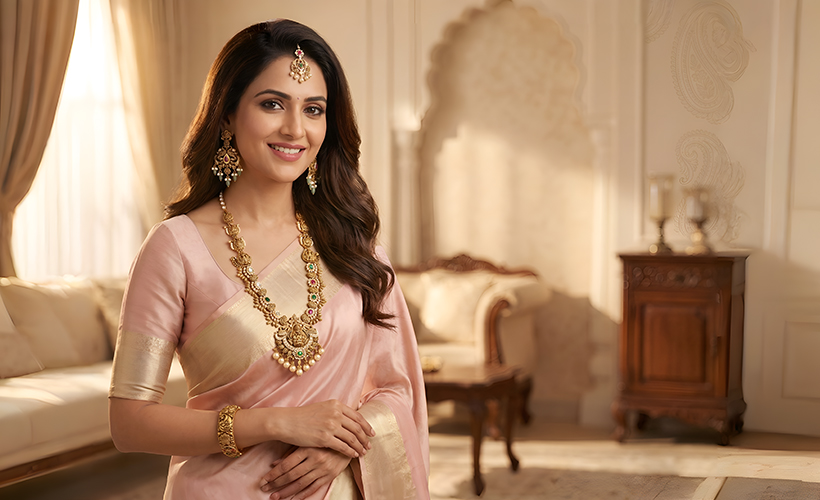
Story of Traditional Indian Jewellery Styles (Temple, Nakshi, Pachi, Polki, Etc.) And How They Inspire Modern Designs
There is something about Indian jewellery that makes it timeless.
It has withstood the changes of time and nature.
Each Indian jewellery design is an artwork in itself. It tells a story of intricate craftsmanship and regional identity. Traditional styles like Temple, Pachi, Polki, Kundan, Meenakari, Jadau, and others have maintained deep roots in India’s diverse histories.
Artisans and designers have given these styles a new dimension over time. They have reimagined them in different ways while ensuring they reflect changing aesthetics and lifestyles.
How They Were Adapted Over Time?
Traditional jewellery has adapted to changing times instead of staying rooted only in the past. Over the centuries, it has flourished through different ages. Jewellery styles have undergone tremendous changes and evolved in varied forms, from aesthetics to textures, in a subtle manner.
The following points underline the forces at play:
Changing Materials & Techniques: Precious stones, semi-precious stones, and synthetic stones have changed over time due to cost and access. Lighter metals, alloys, and plated work have also made jewellery more affordable. Modern tools like laser cutting and 3D modelling allow intricate replicas and modifications.
Regional Cross-Influence & Hybrid Styles: Jewellery styles have seen North-South blending, such as Southern designs with Kundan or Polki work. Mughal, Persian, Colonial, and local folk styles have also influenced Indian jewellery. Designs have also adapted to climate and local taste, with lighter designs for warmer regions and heavier styles for cooler or less humid zones.
Shifting Social & Cultural Functions: Jewellery moved from divine adornment in temples to performance use in dance, bridal and ceremonial occasions, and everyday wear. The decline of royal patronage and the rise of mass markets and the middle class also changed jewellery’s role as both ornament and investment.
Changes in Aesthetic Preference: Jewellery has transitioned from very heavy designs toward lighter and more wearable designs. Simpler motifs now suit modern minimalism, while mix-and-match styling fuses heritage designs with modern fashion.
Globalization & Fashion Industry: Global design trends like Art Deco, minimalism, and boho styles have influenced how traditional motifs are used. Jewellery exports and diaspora demand have also encouraged styles that appeal to western consumers.
How Traditional Styles Inspire Modern Designs?
Modern jewellery designers take inspiration from these classic styles. They reinterpret motifs, materials, and techniques in new ways that cater to both heritage and modern sensibilities.
The following table explains different ways in which traditional styles are inspiring modern jewellery.
| Traditional Element | How It Is Being Reinterpreted in Modern Designs | Examples / Trends |
| Motifs & Symbolism | Classical imagery like peacocks, gods and goddesses, lotus, and floral vines is now used more abstractly. Peacock feathers are stylized, lotus petals are simplified, and mythological figures are reduced to outlines or silhouettes. | Nakshi or Temple motifs are used as pendants or charms instead of full necklaces. Motifs are printed or laser-etched onto metal surfaces in smaller, minimalist versions. |
| Techniques | Ancient techniques like hand carving, enamelling, Polki, and Kundan are kept alive but combined with modern tools like laser technology and 3D printing. Lighter metals and mixed materials make the art wearable for daily use. | Lighter Polki earrings, Kundan studs, enamel backs, and lightweight designs are becoming popular. Stones are also combined with resin or lab-grown stones for cost-effectiveness. |
| Fusion Jewellery | Two or more traditional styles are mixed, or traditional styles are fused with western or global design languages. For example, a choker may combine Polki, Temple carving, and a modern clasp. | Bridal sets with Nakshi Temple designs matched with western-cut gemstones, everyday necklaces with temple pendants and delicate chains, and layering of traditional designs with modern simple chains. |
| Minimalism & Wearability | Bulk is reduced through slim necklaces, lightweight jhumkas, modular designs, and detachable elements. These allow jewellery to transform from one use to another. | Small Polki-inspired ear studs, lightweight chokers, temple mini-series for office wear, and travel-friendly jewellery that nods to tradition without feeling too heavy. |
| Alternative Materials & Finishes | Oxidized metal, silver, and gold plating are used instead of only 22-carat gold. Semi-precious stones, synthetic diamonds, lab-grown diamonds, beads, tassels, and enamel-inspired finishes are also used. | Oxidized temple-style bracelets, Polki inspired by lab-cut uncut-look stones, resin or enamel for colour, and gilded-brass pendants. |
Specific Examples from Recent Trends
The following are specific examples drawn from recent trends, designers, and designs.
Nakshi + Pachi Harams & Long Chains: Traditional long chains or harams with Nakshi and Pachi work are being recreated in lighter versions with detachable parts. Floral motifs, peacocks, and goddess figures are being converted into shorter necklaces or statement chokers. These work well for younger consumers who love the dramatic heritage look but prefer lighter and more versatile jewellery.
Polki & Kundan in Bridal Fusion: Brides today often mix Polki sets with modern gowns or Indo-Western lehengas. Designers are incorporating cleaner lines with fewer layers or mixing modern-cut stones to add sparkle while keeping the heritage appeal intact. Kundan and Meenakari backs are also used to create reversible or double-faced designs, giving versatility with one colourful side and one subtle side.
Temple Motif Repurposed: Sacred motifs of temple jewellery, such as Lakshmi coins, temple arches, and carved deities, are highly popular. They are now used in modern rings, ear cuffs, anklets, and hair accessories. Minimalist designs may use only arch shapes or sacred silhouettes rather than full carvings. Fashion jewellery brands are also bringing in temple-style pendants.
Fashion & Pop Culture Influence: Bollywood costume designers and fashion weeks have influenced jewellery demand. When celebrities wear vintage temple jewellery or Polki-Kundan sets in films or weddings, demand increases. Bridal magazines also showcase fusion bridal jewellery with traditional-style heritage designs. Even global designers sometimes draw inspiration from Indian motifs like lotus, peacocks, and paisleys.
Modern Materials, New Audiences: There is rising demand, both domestic and among the Indian diaspora, for more cost-effective versions of heritage styles. This has encouraged the use of gold plating, imitation stones, semi-precious stones, and lighter metals instead of real uncut diamonds. Artisan-led small brands are also reviving niche styles like regional Nakshi or Pachi in conscious ways, preserving craft while meeting ethical and sustainable consumer concerns.
What Makes These Traditional Styles Endure?
Many people wonder what makes traditional jewellery flourish even today and what powerful appeal it continues to offer.
The following explains what makes it unique:
Cultural Identity: Jewellery helps people connect with their heritage, religion, and family legacy. In times of change, it acts as an anchor.
Symbolism & Rituals: Many traditional jewellery designs carry ritual or spiritual meaning. Temple jewellery, motifs of gods, Lakshmi coins, and similar designs are not just decorative. They are also tied to life events like festivals and weddings.
Artisan Craftsmanship: Handwork, detail, and artistry give traditional jewellery an aura that continues to fascinate people. Modern mass-produced items rarely replicate the same depth. Many people value owning something handcrafted.
Visual Richness / Uniqueness: Traditional jewellery styles are visually distinct. They are full of detail, rich textures, contrasts, and layering. Their motifs and techniques evoke centuries of aesthetic tradition.
Versatility of Inspiration: The motifs, designs, and methods are adaptable. They can be scaled, stylized, simplified, or fused with other aesthetics, making them evergreen sources of creativity.
What to Expect for the Future?
Traditional jewellery spans several centuries and has survived the passage of time with grace.
As the 21st century progresses, the role of traditional jewellery and its design styles will continue to evolve.
The following are some trends to watch:
Digital & Virtual Designs: Virtual try-ons and AR-based jewellery selection will make people more confident in selecting heritage styles. Digital marketplaces will also make regional handcrafted jewellery more accessible globally.
Minimal Heritage: There will be a continued movement toward minimalism infused with heritage. Small motif rings, studs, and charms may be preferred instead of full temple sets.
Customization & Personalization: Carving initials, customizing motifs such as a favourite flower or deity, using mixed metals, and creating bespoke designs will allow traditional styles to become more personal and unique for the wearer.
Sustainability & Ethical Jewellery: Lab diamonds, recycled gold, transparent sourcing, and consumer preference for responsible jewellery will grow stronger. This reflects the idea of heritage with responsibility.
Hybrid Jewellery: Traditional jewellery may fuse with technology or utility. This may include jewellery with LEDs, wearable tech, detachable parts, brooches, pins, and multi-functional wearables that serve more than one purpose.
Final Word
Traditional Indian jewellery styles like Temple, Nakshi, Pachi, Polki, Kundan, and others are not just beautiful adornments.
They are also repositories of history, artistry, and regional identities.
These styles adapt as the country changes, but even in adaptation, they carry their roots forward.
Modern jewellery that draws inspiration from these styles does more than echo the past. It creates new legacies and designs that respect tradition while shaping the future.
The finest jewels are those that carry tradition rather than just preserving it.