
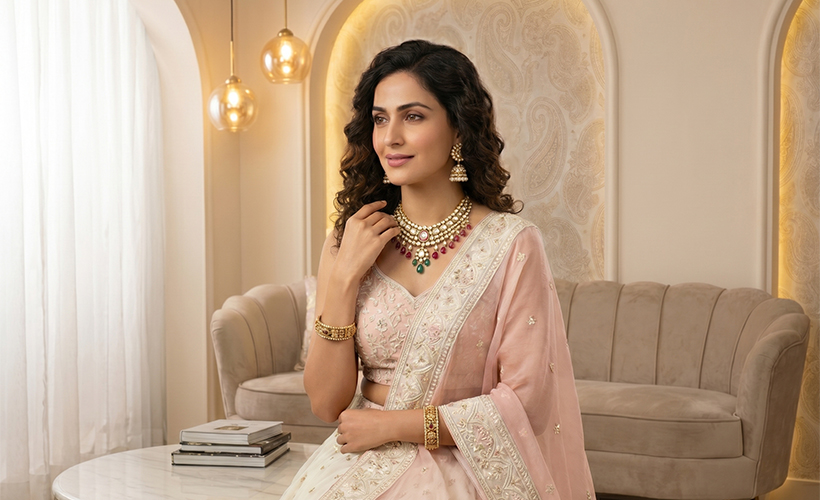
What Current Jewellery Trends NRIs Love & How to Adapt Them With Traditional Indian Designs?
NRIs (Non-Resident Indians) often need to balance the best of two worlds – deep connection to Indian cultural heritage and exposure to global fashion trends.
This can create interesting preferences when it comes to jewellery. They need to marry glamour and versatility with sentiment and elegance.
Every year, new trends emerge among NRIs. Many find creative ways to adapt them using traditional Indian designs.
Jewellery Trends Popular Among NRIs
The following are the themes that NRIs are drawn to in 2025.
Fusion / Heritage with Modernity: Jewellery reflecting Indian heritage like Kundan, Jadau, Polki, Temple Jewellery motifs, etc., reimagined in lighter or subtle forms.
Lightweight, Practical Jewellery: Sought-after especially for destination weddings and day-to-day wear abroad. NRIs prefer lighter pieces with less heavy chokers, such as lighter gold, gold-plated, or convertible pieces.
Personalization & Meaning: Jewellery that is meaningful, such as birthstones, symbols, custom designs, and initials, is in high demand. These pieces carry emotional or familial significance and often tell a story.
Colored / Semi-Precious Gemstones & Pearls: Classic diamonds and gold still matter. However, NRIs are showing more interest in vibrant gemstones like emerald, ruby, sapphire, and semi-precious stones like agate, citrine, and turquoise. Pearls, especially neo-pearls with imperfect shapes or asymmetric arrangements, are also gaining attention.
Mixing Metals & Mixed Materials: Many pieces combine rose gold, white gold, gold plating, mixed metals, enamel stones, pearls, and oxidized metals. They offer more flexibility and work well with Indian and western outfits.
Statement Pieces & Bold Designs: Large earrings, oversized maang tikkas or passas, bold chokers, statement rings, and cuffs are especially preferred for bridal, festive, and special events. NRIs are opting for grandeur in key pieces while also looking for adaptability and comfort.
Minimalism for Everyday / Office Use: Slim chains, dainty studs, small earrings, lightweight bracelets, and bangles work well with daily wear abroad, including jeans, office wear, and casual outfits.
Convertible / Versatile Pieces: Jewellery pieces that can serve multiple purposes are highly useful. For example, a heavy necklace that splits into pendants, chokers that can be shortened, or earrings that can be dressed up or down.
Ethical, Sustainable, & Lab-Grown Elements: NRIs, especially the younger generation, are more eco-conscious and aware of material sourcing. They prefer ethically mined metals, stones, or lab-grown diamonds.
Layering, Stackables, & Mixed Styles: Layered necklaces and stacking rings fuse pieces of different lengths. Mixing traditional jewellery with western minimal pieces is a popular way to express personal style.
Why They Appeal to NRIs?
The following explains why these trends connect with NRIs.
Cultural Identity & Nostalgia: Jewellery is one of the best ways for NRIs to stay connected with their Indian roots. Traditional motifs like Temple Jewellery, Polki, and Kundan carry emotional value, especially for festivals, weddings, and heirloom pieces.
Lifestyle & Practicality: When living abroad or traveling, carrying extremely heavy jewellery is not always practical. Jewellery pieces need to be lighter and easy to match with both Indian and western clothing.
Fashion Exposure & Global Influences: NRIs are exposed to global fashion trends, especially if they live in the West or in cosmopolitan cities. This drives them to seek jewellery styles that look good in both Indian and non-Indian contexts.
Social & Environmental Awareness: More NRIs are becoming eco-conscious. They prefer jewellery makers who follow ethical sourcing and use recycled or lab-grown metals and stones.
Cost, Value, & Sentiment: Import duties, shipping, and customs charges can make heavy gold expensive. Lighter or adaptable pieces offer better cost per wear, while heirloom redesigns retain sentimental value.
How Modern Trends Can Be Adapted With Traditional Indian Designs?
NRIs want modern trends to blend with traditional Indian jewellery designs in a way that looks seamless and meaningful.
The following tips explain how this can be done.
Reimagined Traditional Motifs in New Forms
Redesign heavy traditional sets into modular or convertible pieces. A full bridal set with a heavy necklace, earrings, or matha patti can be reworked so that the necklace detaches into smaller pendants, earrings can be worn separately, and the matha patti can be detachable.
Use traditional motifs like Temple, Floral, Paisley, Peacock, and Deity figures, but simplify their execution with cleaner lines and flatter profiles.
Scale down the size for everyday wear. For example, choose smaller and lighter Jhumka or Chandball designs instead of very heavy traditional versions.
Colour and Gemstone Choices – Modern Meets Heritage
Semi-Precious Stones and Neo-Pearls: Use colored stones that are meaningful, such as birthstones or stones with family significance. Pearls in asymmetrical forms mixed with stones or metals can also create a fresh modern look.
Pastel and Rose Tones: If you do not want too much gold glare, opt for rose gold or gold with rose-gold plating. Rose gold and white gold can work beautifully with traditional Indian motifs, especially bridal outfits and pastel lehengas.
Enamel Work & Subtle Color Pop: Traditional meenakari or colored enamel can be used in small motifs in earrings, pendants, and bangles. This modernizes old designs while preserving heritage.
Material Mix & Metal Blends
Mixed Metals: Instead of pure yellow gold, choose pieces that mix yellow, white, or rose gold, or gold-plated base metals. This helps reduce cost and weight while adding flexibility.
Lightweight Materials / Hollow Work: Hollow gold work, lighter versions of traditional temple jewellery, or lightweight Kundan jewellery can help reduce weight while retaining grandeur.
Alternative Metals, Recycling, and Lab-Grown Stones: Lab-grown diamonds for Polki or Kundan settings, and recycled gold with ethical sourcing, appeal to eco-conscious NRIs.
Versatile & Convertible Design
Pieces That Serve Multiple Purposes: Bridal pieces can be designed in a way that they can be repurposed. A long necklace can be converted into a shorter choker with a dangling piece, or pendants can be removed and used as brooches or earrings.
Traveling & Destination Wedding Friendly Sets: NRIs who have weddings abroad appreciate jewellery that packs small, can be transported easily, and can go from day events like Haldi or Mehendi to night events like weddings or receptions with minor adjustments.
Stackables / Layering: Combine a traditional choker or temple necklace with thinner chains. Stack thin bangles with one heavier kada. Layer rings that include modern minimalist bands with traditional gem-stud rings.
Statement Vs Everyday Balance: Have one or two showstopper pieces for weddings and festivals, and several subtle pieces that can be worn often with western outfits, office wear, or casual outings.
This way, the jewellery collection remains functional and expressive.
Styling Across Outfits & Occasions
Indo-Western Outfits: Traditional Indian jewellery does not always need to be reserved for lehengas or sarees. A Jadau choker can go with a gown, Kundan earrings with a plain dress, or temple jewellery cuffs with western jackets.
Color Coordination: For outfits with pastel or muted hues, match stones or gold tones to make the overall look cohesive.
Mixing Jewellery Types: Pair a minimal western-style bracelet or watch with a traditional bangle, or wear western rings with traditional necklaces.
Necklines & Silhouette Consideration: Modern silhouettes like western gowns, strapless outfits, and off-shoulder styles require different jewellery placements. Chokers work better with strapless outfits, long pendants with V-necks, and drop earrings when the hair is up.
Final Word
Jewellery for NRIs is more than ornamentation.
It is identity, celebration, and self-expression.
The prevalent trends from fusion heritage to gems and colored stones, personalization, ethical sourcing, and more reflect a desire to balance tradition with modernity, and sentiment with style.
To adopt these trends with traditional Indian designs, thoughtful selection and smart design choices are essential. This ensures jewellery that resonates with your roots and works with your lifestyle, in India and abroad.